
Hitting the Slope(ers)
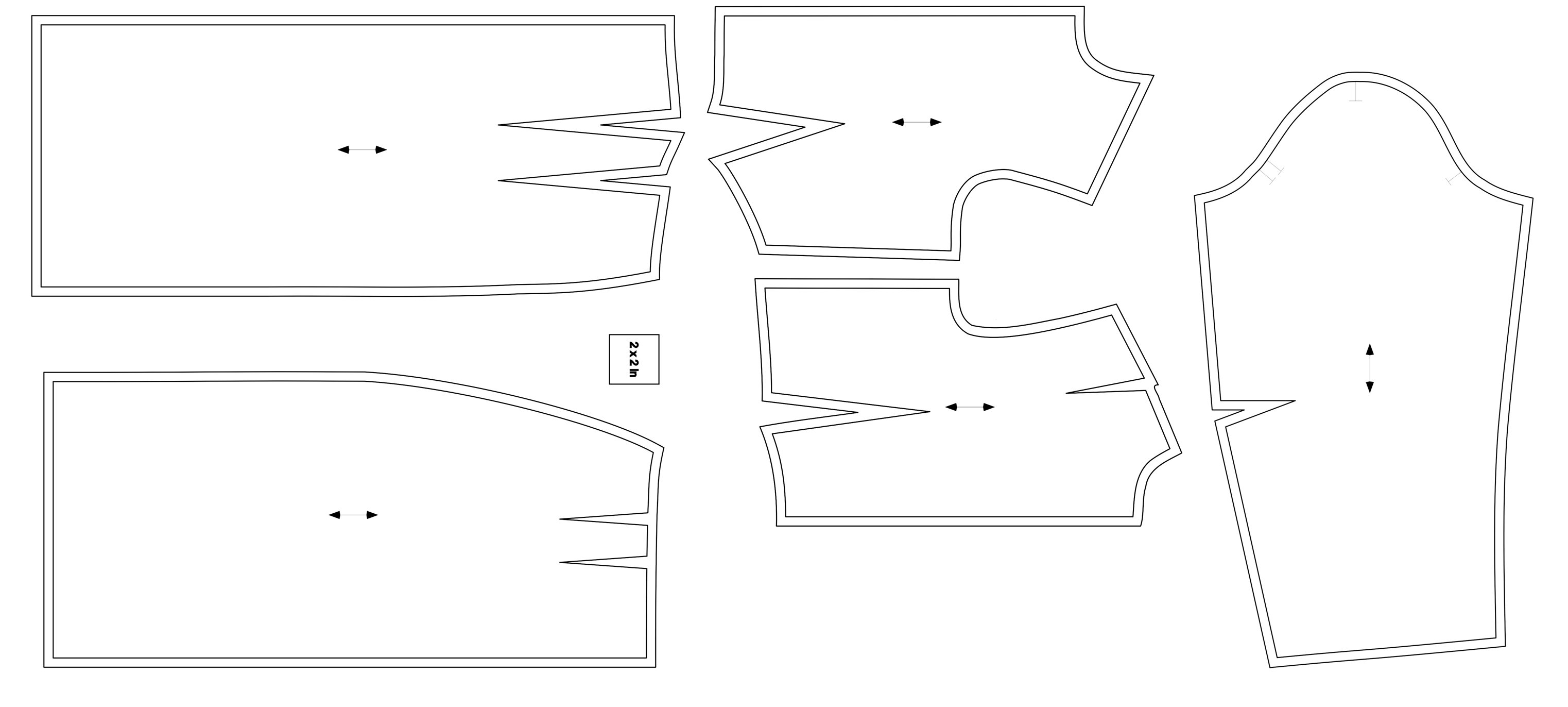
My first foray into pattern drafting was an exercise in pure frustration and patience. When I committed myself to becoming a skilled seamstress, I knew it was a hurdle I would have to get over at some point, but in true 'me' fashion, I made it 10 times more difficult for myself than it needed to be. How you may ask? In addition to learning how to make my own slopers, I intended to simultaneouly learn how to digitize them—or more accurately—create a pattern without ever cutting a physical piece of paper.
I have of course been aware of the concept of creating patterns since early on in my sewing journey, but it always seemed like something reserved for professional pattern makers. I was barely even aware that there were individuals making patterns outside of the big four: McCalls, Simplicity, Butterick, and Vogue. That was until I watched The Closet Historian on YouTube. Let me tell you, I am continuously blown away by her prolific collection of self-made clothing. I truly believe she eats, drinks, breaths fashion. My partner, before learning her name, often called her "midnight lady," because of how often I would fall asleep to one of her videos.
Inspired by her fabulous fashion sense, I set out to learn the skills she exhibited in her videos, starting with buying the fashion textbook she purportedly uses: Patternmaking for Fashion Design by Helen Joseph Armstrong.
The event that sealed my frustrating fate was my partner getting me the most thoughtful gift I have ever received for Christmas: a short throw projector from ebay, and a tripod/microphones for filming. Along with using the free PatternProjector.com to callibrate, the projector would allow me to cast PDF patterns onto my table, making obsolete my need for tissue patterns. I ended up using this for many a digital pattern, and it worked great.
And so I decided to create digital versions of slopers and use image editing to manipulate my patterns via slash and spread methods. This would not only cut down on paper waste and storage space, but also maintain an accurate edit history with all previous fit iterations. What could go wrong?
Twelve muslins later I figured out the answer: everything.
I think I just lack the right...intuition? It feels as though every wrinkle, drag line, and pucker can have one of many possible root issues. When you fix one, another fit issue is created. I follow the book, look up advice on sewing forums, but nothing is exactly right. And the worst part? If it's anything more complicated than taking in a seam, you have to cut out and sew a whole new mock up to check the fit of the adjusted pattern. I wanted to PULL MY HAIR OUT. After staring at the same dress for so long, you can no longer tell what is a fit issue, and what is just fabric being fabric.
Anywho, I started by having my partner measure me. There are 60+ measurements needed for creating all your basic slopers (including those for pants, which I didn't use, but still wanted in case I decided to tackle those next). Center back, center front, hip depth, hand circumference, back of neck, armhole depth, shoulder slope, abdomen arc...the list goes on. I then plugged these measurements into a free pattern drafting program I found called Seamly2D. It essentially lets you create points and vectors, whose lengths and angles can be defined by formulas, using your measurements as variables. Based on the pattern drafting formulas shared in the aforementioned fashion design textbook, I duplicated these methods in the program. My thinking was, if a measurement needed to be adjusted, I could just change it in the 'variables' section, and everything would shift/blend accordingly.
This ended up being more complicated than I thought. Seamly2D was not built for the fitting phase. I couldn't figure out a simple way to slash a pattern and rotate it around a point. In the end, I exported the base pattern as an image file, and simply did that in inkscape instead. This also was not ideal because it is surprisingly difficult to measure distances in inkscape. For example, if I want to decrease a bust dart by half an inch around a point of rotaion, there is no way to easily have it close that distance along an arc accurately. All I can see is how much the whole selection moved in the x and y directions—not the distance one point traveled along the arc. If anyone has a recommendaion for free or cheap software for pattern drafting, I am ALL EARS. It seems like all the useful software is for, well, professionals. I don't want to pay professional prices for something I intend to use at home for practice every once in awhile.
Also, pinning a section and transferring it to paper is a lot more straightforward than transfering it to a digital pattern. On paper, you just lay the pinned fabric down and trace. No math needed. Transferring the change to a digital pattern? You need math. Or at least you need to take some very specific measurements. Pinned a specific-ass shape along your back? How the hell are you supposed to subtract that specific-ass amount of fabric along that specific-ass curve from a digital representation of your pattern?
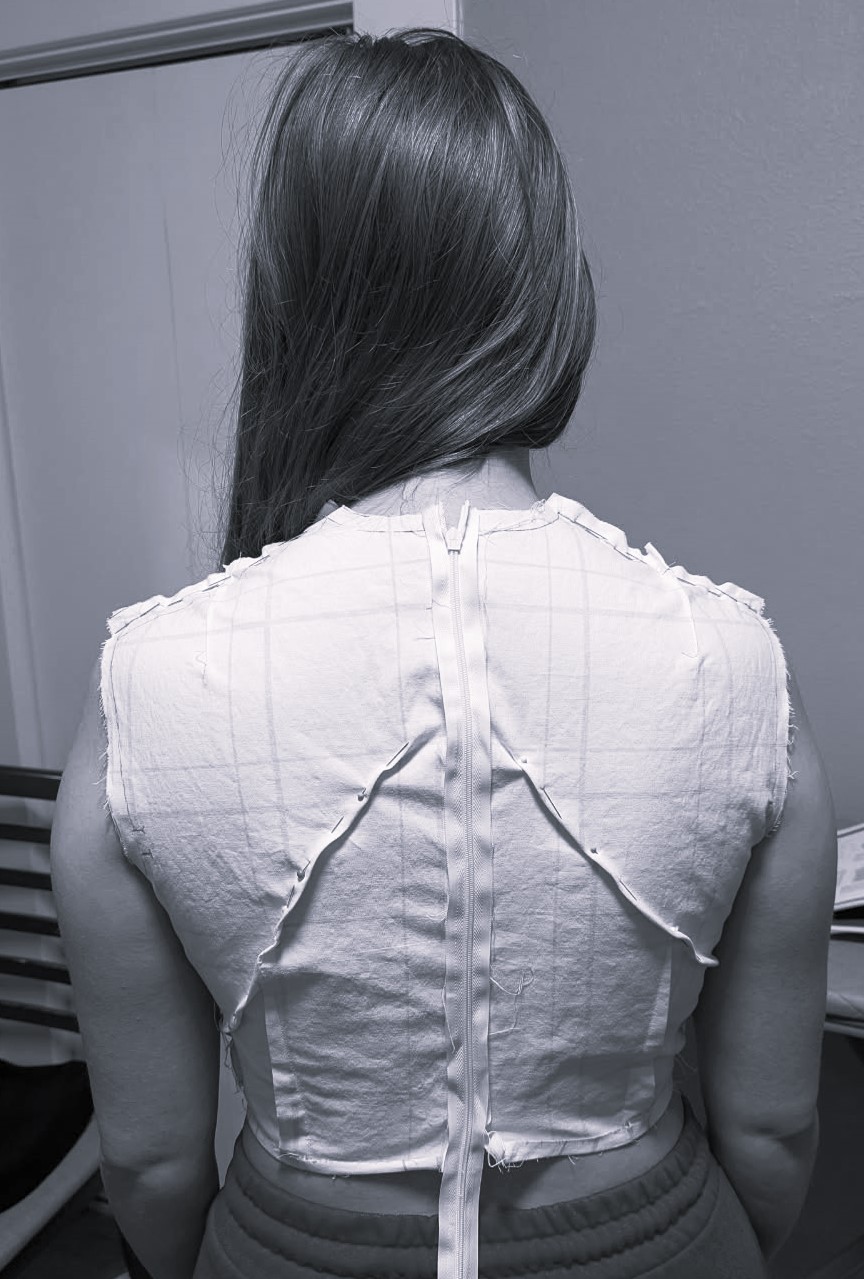
Answer: I don't fucking know.
This process also made me realise my body has some quirks that I hadn't even bothered to notice before. Who knew I had swayback, short waist, AND outwardly rotated elbows?! Ugh.
Anywho, after lots of fiddling I ended up with something I am okay with. Presenting my basic dress slopers!
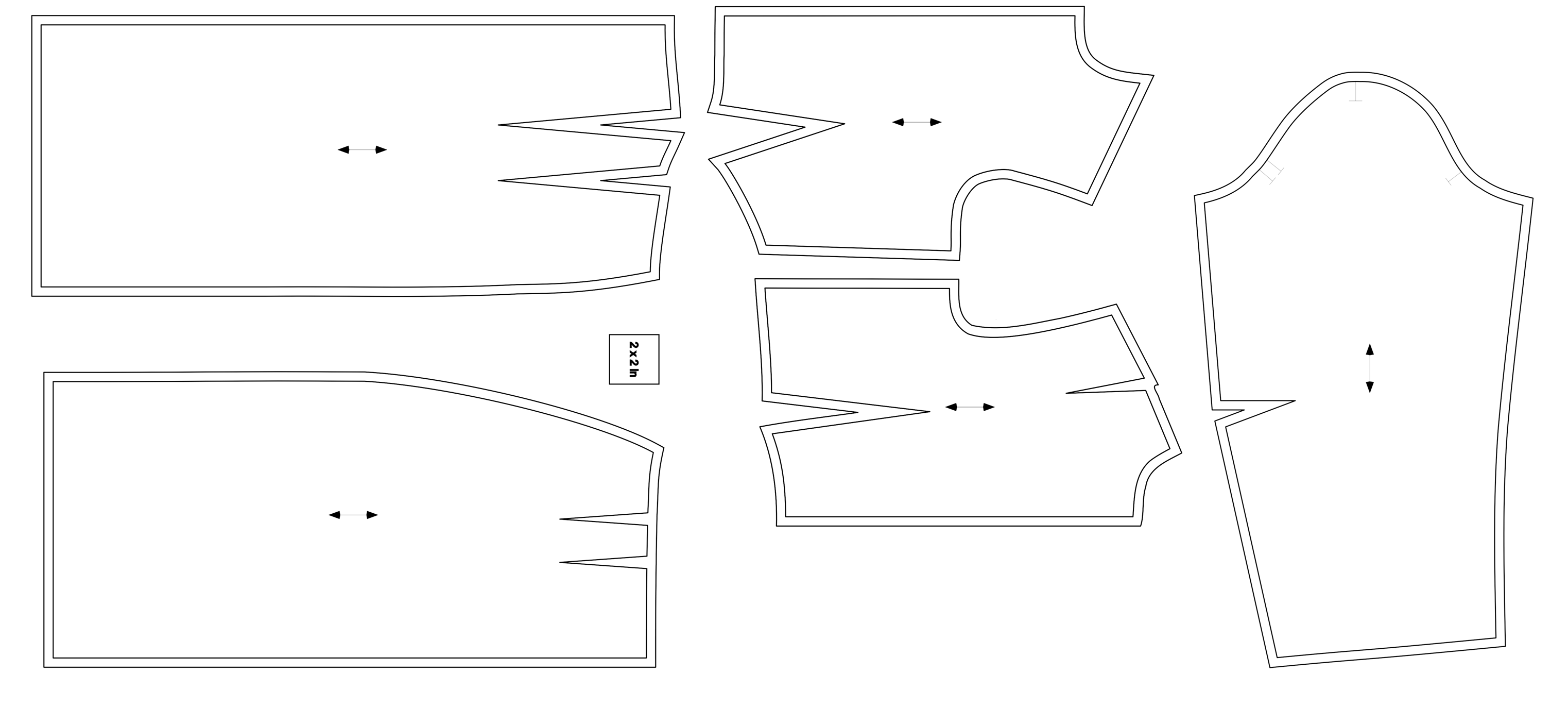
Beautiful, are they not? Excuse my weird mirror selfie, it's the only one I have of the final result (made from Goodwill curtains):
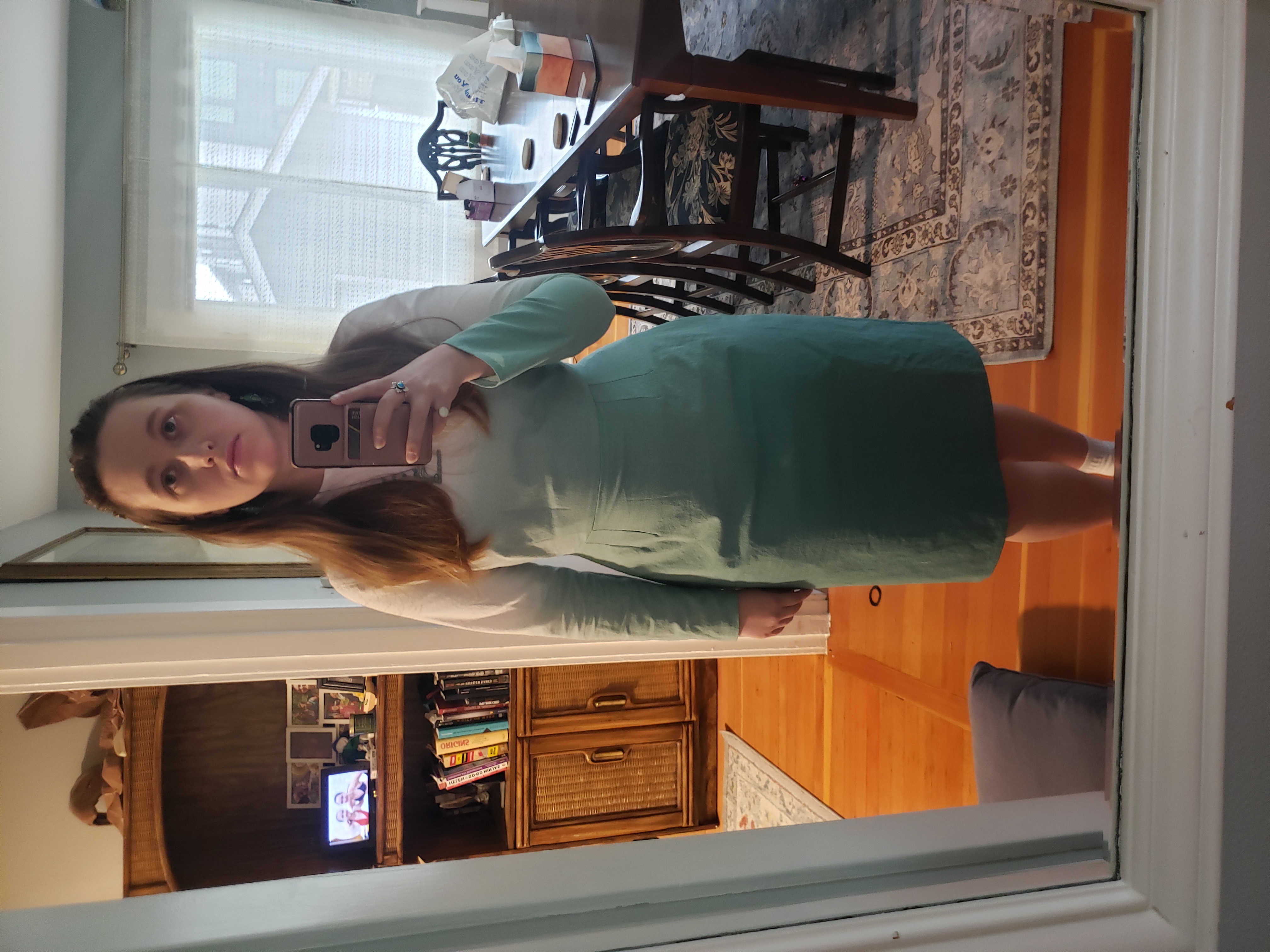
Would I recommend doing this the way I did? Hell no. I wasted so many bedsheets on these mockups. Stick to paper, the way God intended.
Comments