
Siren's Song
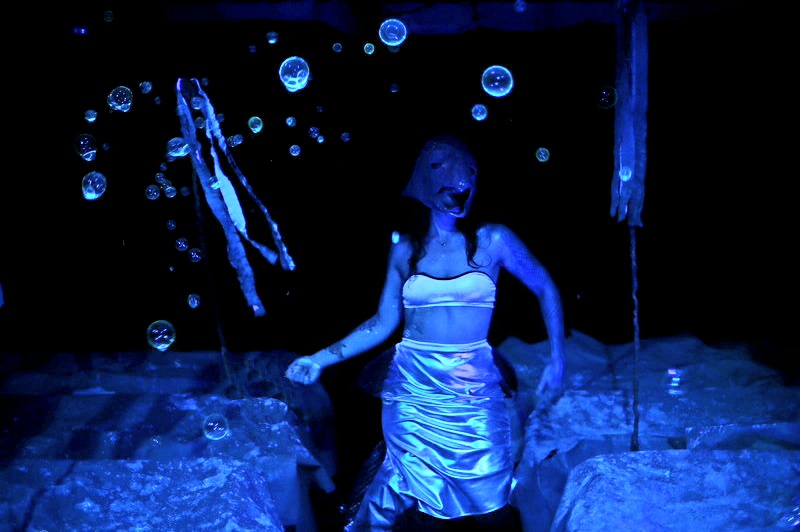
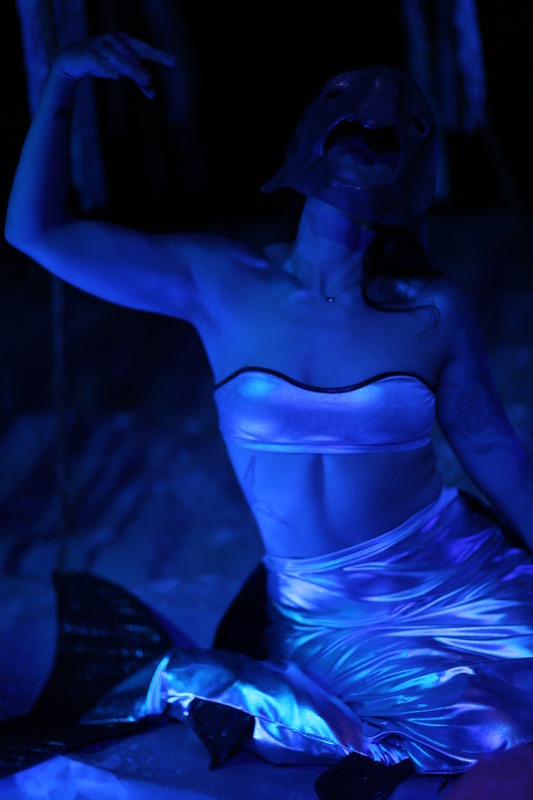
When you enter the house of the theatre, the seats are gone—replaced by the jagged rocks in a hauntingly beautiful lake. Among the kelp, which dances in a gentle current, a curious Siren stalks. When a strangely familiar melody begins to play, it emerges—hormonizing as it floats closer.
I think my ambitions for this costume were much greater than I managed to accomplish. In my initial concept, I had a lot of elements: scales made from aluminum cans, elegantly draped fishing nets, seaweed camoflauged leggings, etc.
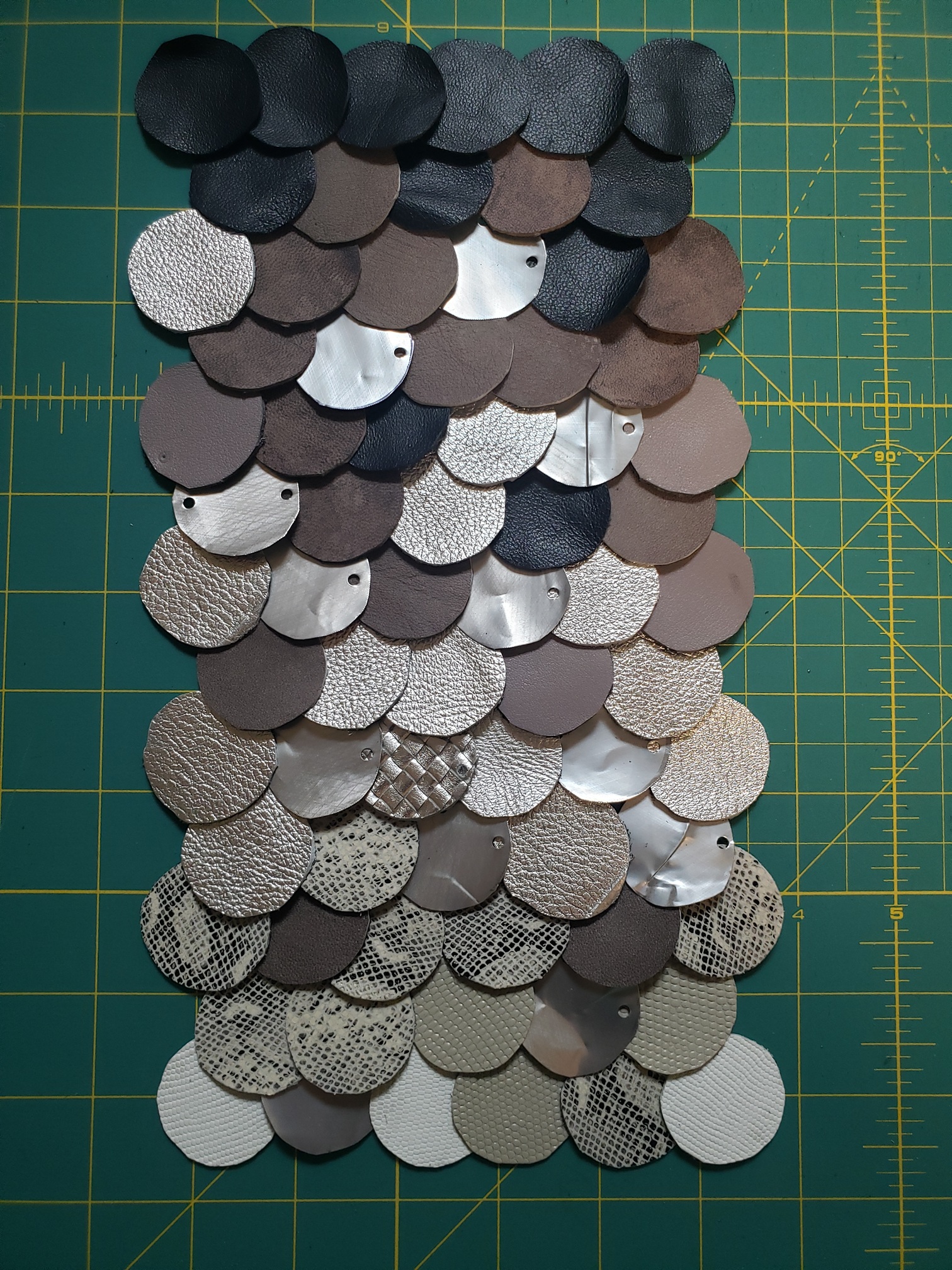
On instagram, I had remembered seeing these recycled art pieces where coin-sized aluminum can rounds were cut and strung up so that they glittered in the breeze. I set up a box in the theatre for people to bring me aluminum cans to use. I washed the cans, made a small template and cut hundreds of them. I think my original plan was to sew them onto the skirt itself...I don't know what possessed me to even consider that. I would have had to painstakingly tack them on by hand. I quickly realized this was impossible, but remembered the leather scraps I had in my closet. I'd been trying to figure out a use for them for awhile—a woman who used to run a purse-making business out of her home gave them up on buy-nothing last year and I took them off of her hands. Maybe I could cut rounds from those and then I'd be able to sew them more easily on my machine? But I gave up on that idea too because I don't think my machine would be happy with me if I tried to use it on leather. (You can see the test swatch I did below). That's when I pivoted yet again to the idea of creating scale-maille. However, the quality that made the aluminum perfect for those art pieces—being lightweight—made them difficult to use as scale-maille. I bought a pack of small rings and attempted to link them together, but they never layed quite right and were constantly shifting into wonky positions. Eventually, I scrapped the idea all-together, which was disappointing, but inevitable.
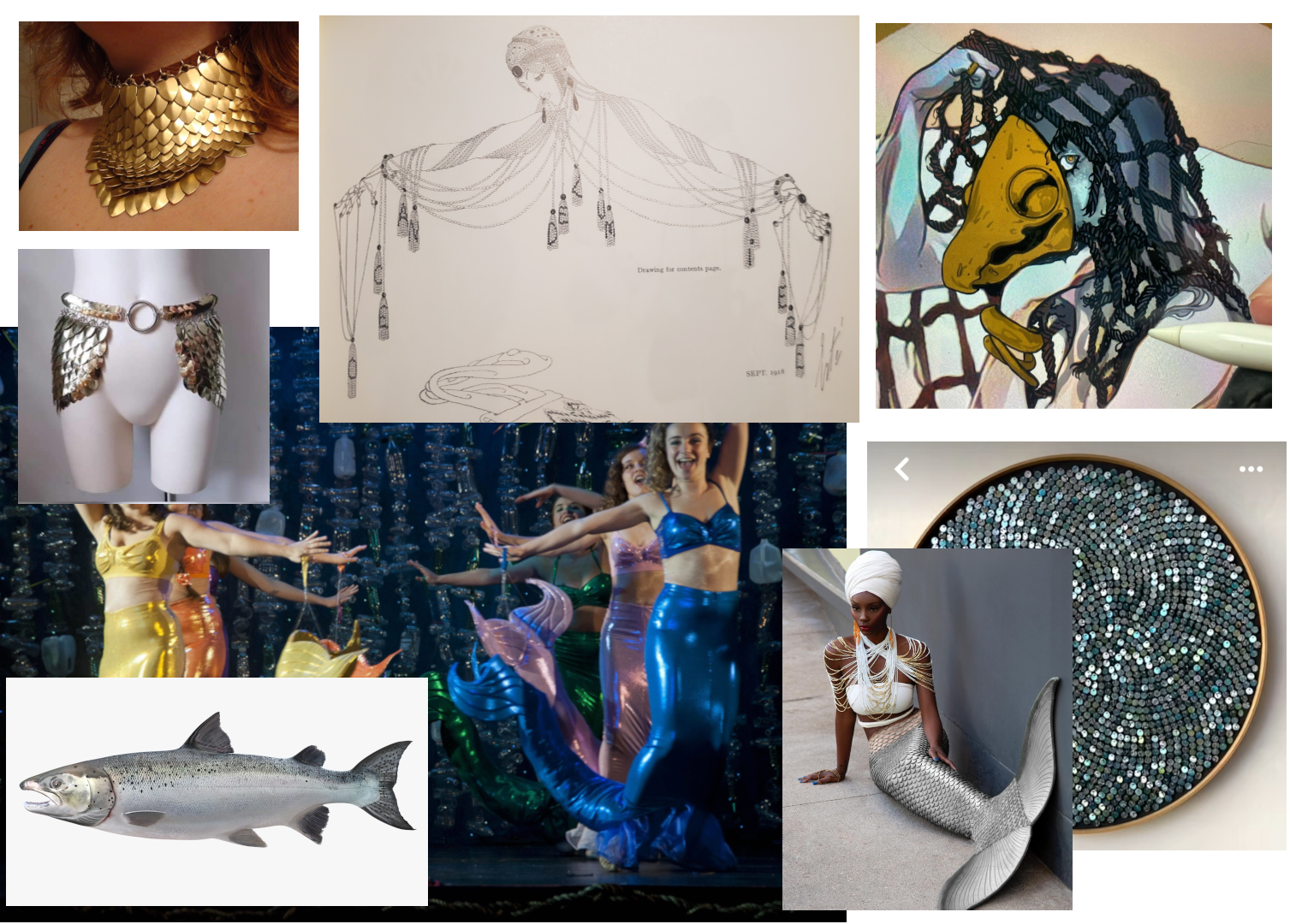
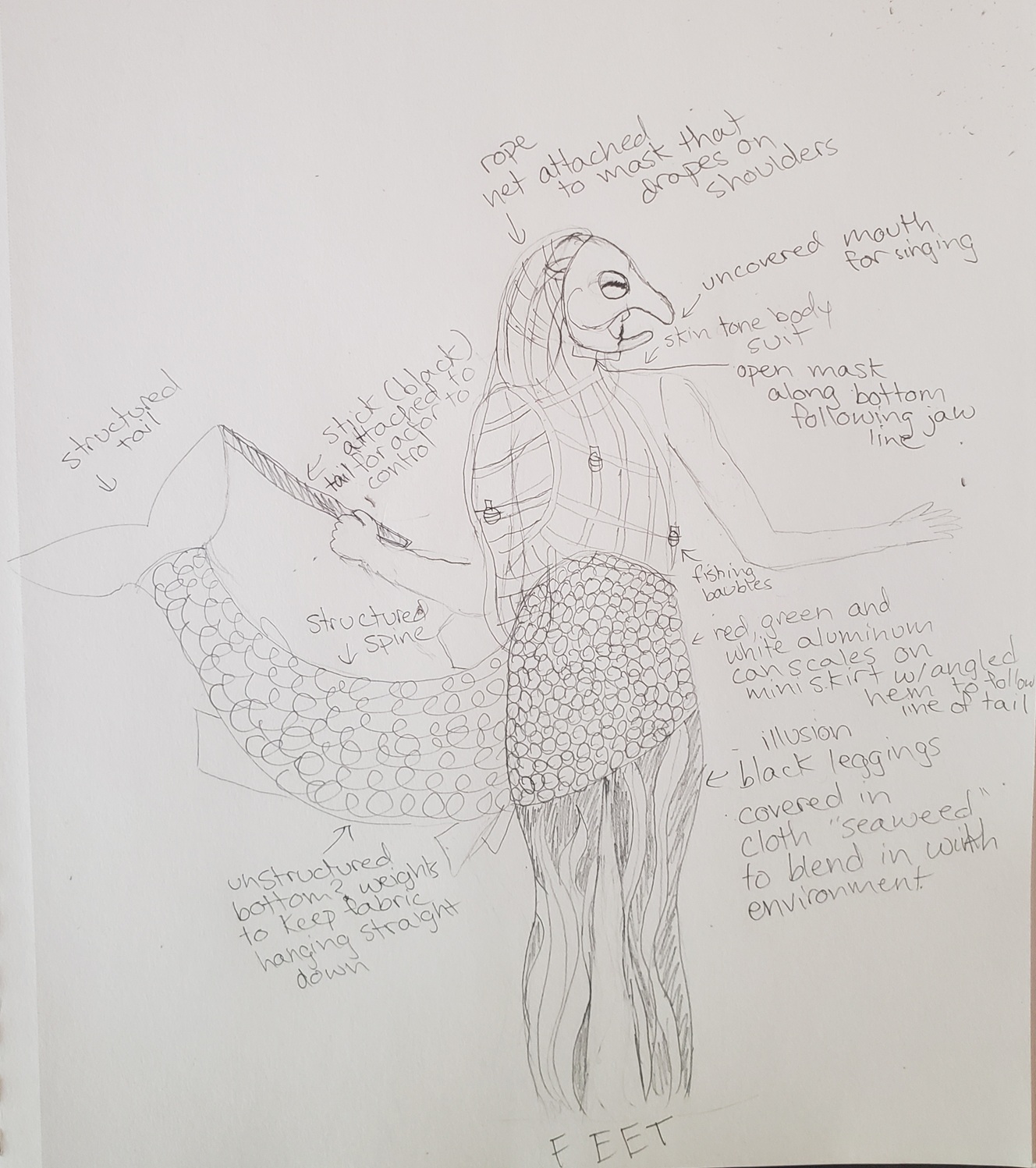
As for the tail, with all of those theater seats to weave in between, I thought it would be a neat idea to utilize them as a way to mask the actor's legs and make it appear as though they were actually swimming through the water. I created a mock up tail as a proof of concept. I wanted it to look full, while also being able to move in a serpentine—or I guess fish-like—manner. I made reed hoops and tied strings to them to get a feel for the shape I wanted, trying as best I could to keep the hoops hanging vertically. A fin shape was cut from scrap fabric with boning channels for structure, and a rivet was added at the top so that a string could be attached to a ring on the actor's hand for them to control the swishing movement.
Once I decided I liked the movement, I moved on to the real thing.
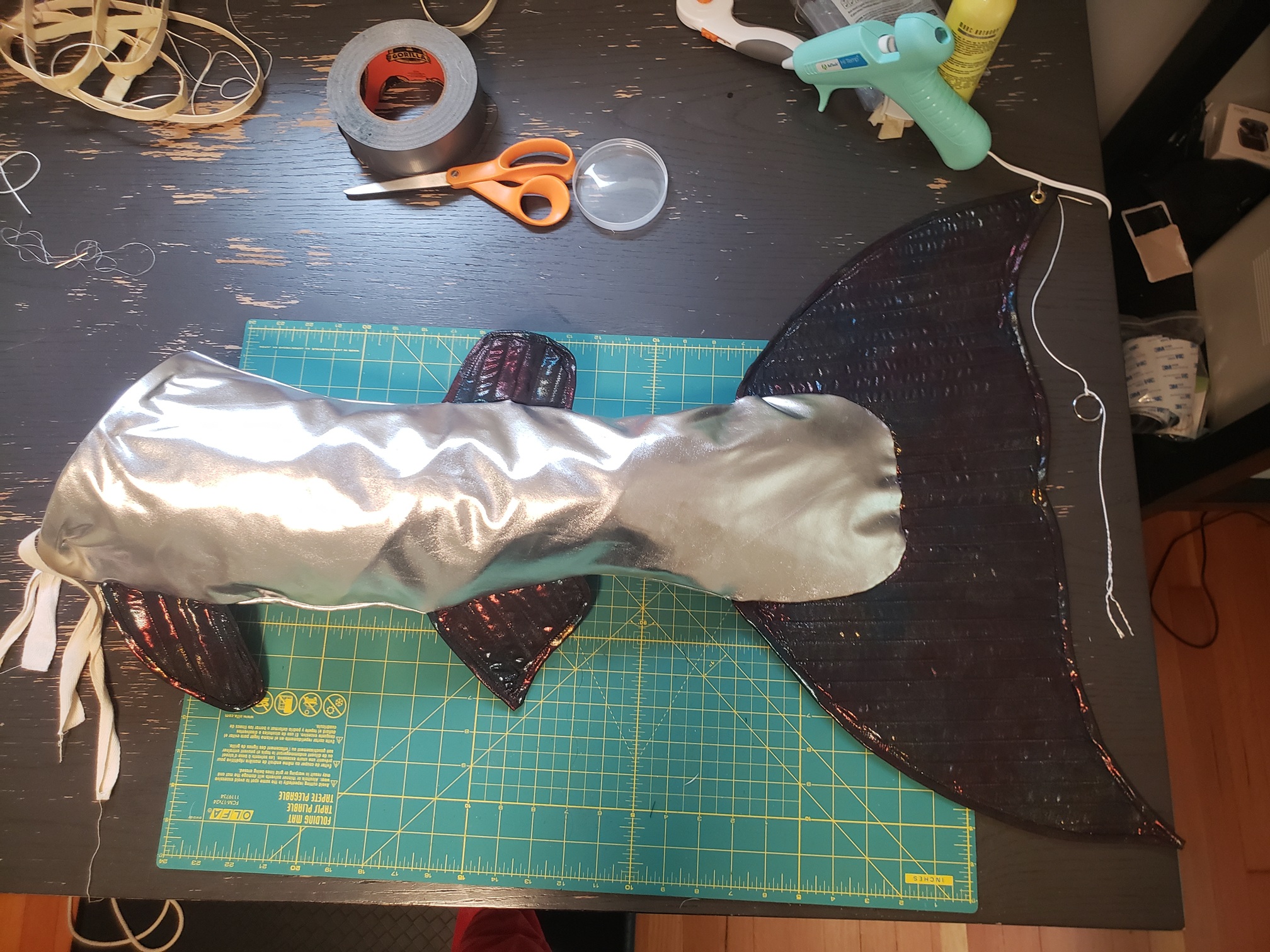
An iridescent black fabric was used for the fins—not exactly sure what kind, but the drape was similar to charmeuse, making it necessary to baste like crazy before adding all of the boning channels. The edges of the fins were all bound with double-fold bias tape that I made from the same material.
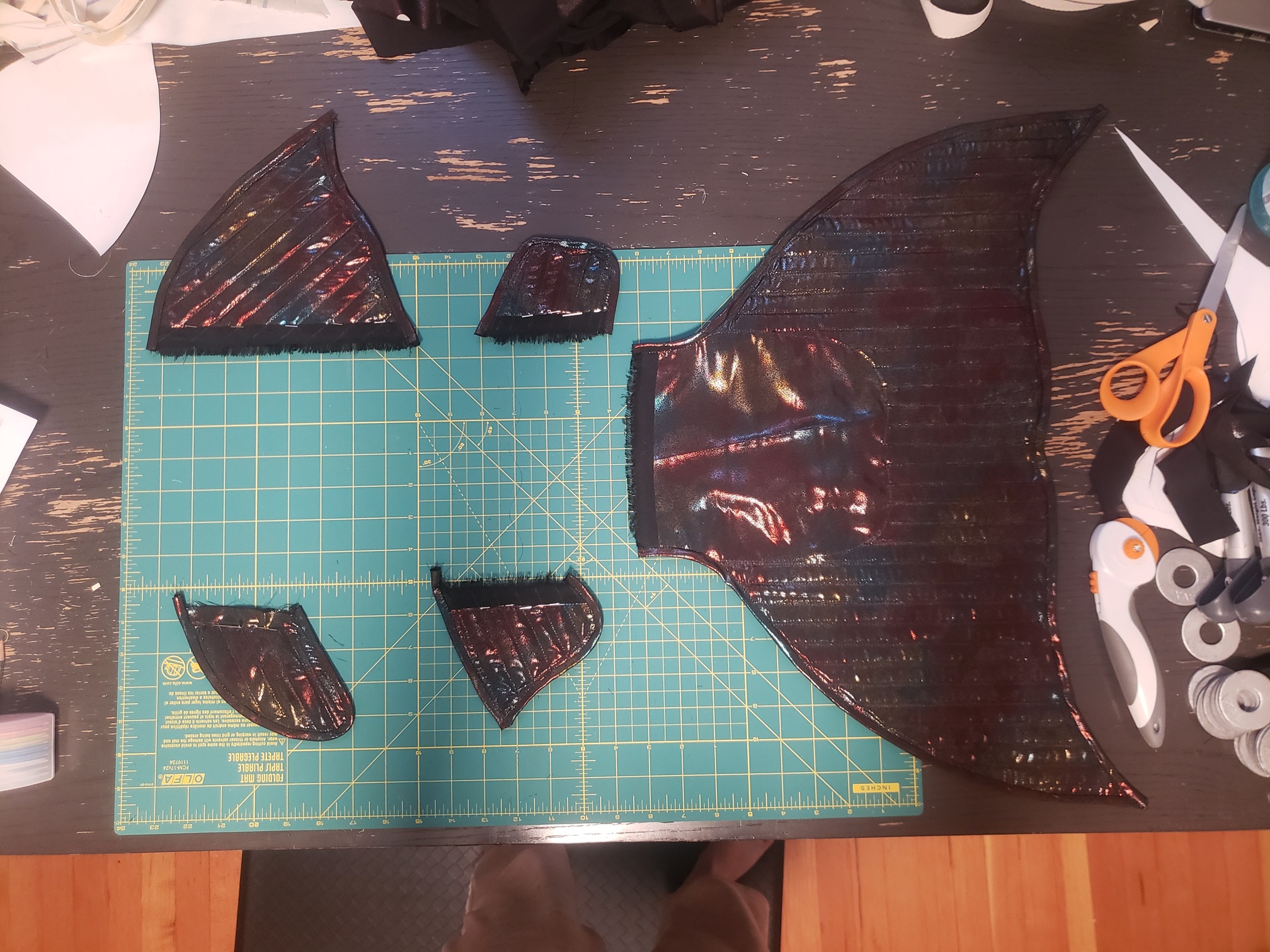
I layed out my mock-up tail on paper and traced the shape they made.
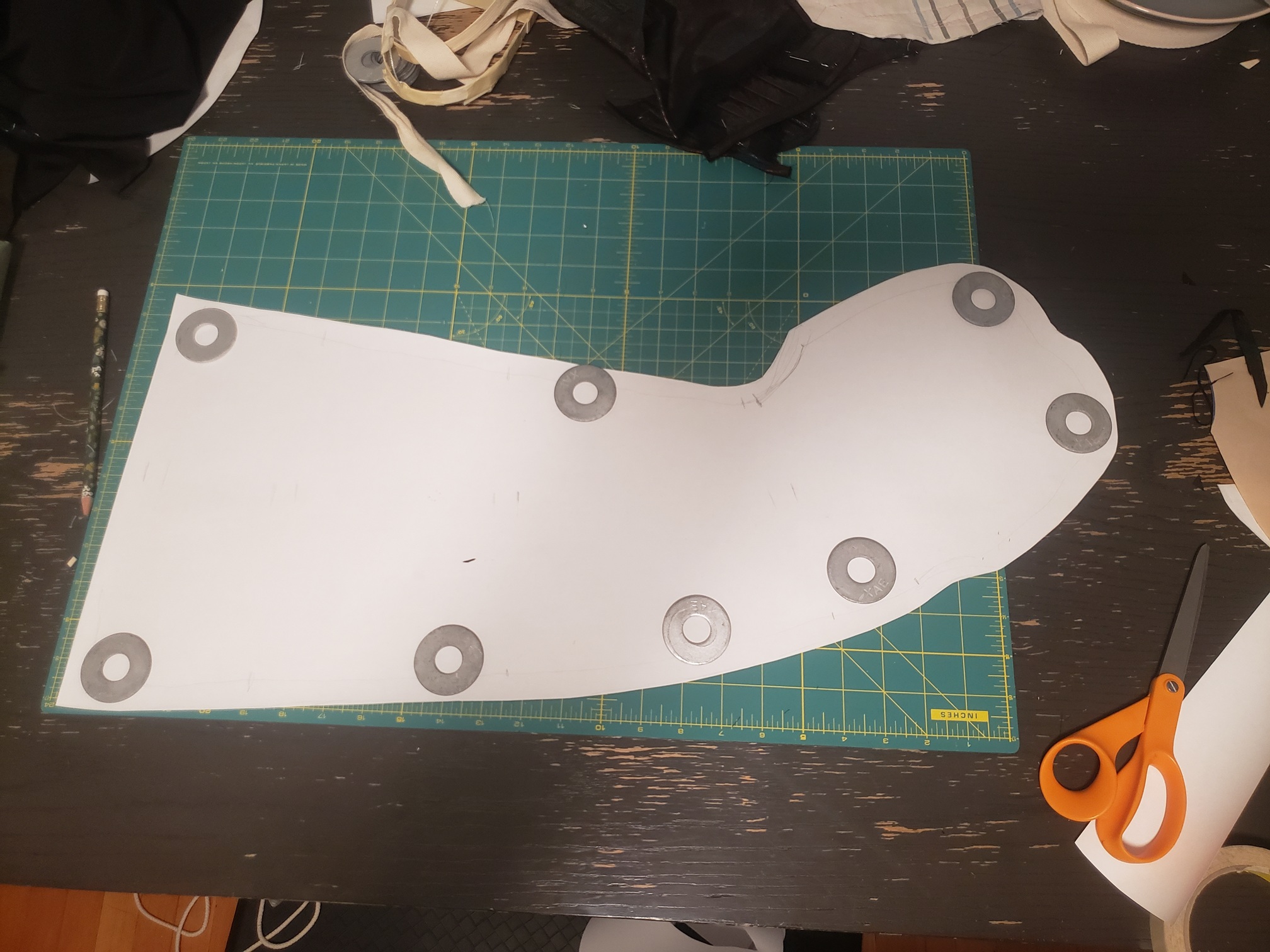
Yes...I do realize how it looks.
This shape was cut twice out of the outer silver spandex fabric, and four times out of tulle. I sewed the silver fabric right sides together, except for the end which I used to sandwich the tail fin by slip stitching it on either side. I caught each small fin in the side seams as well.
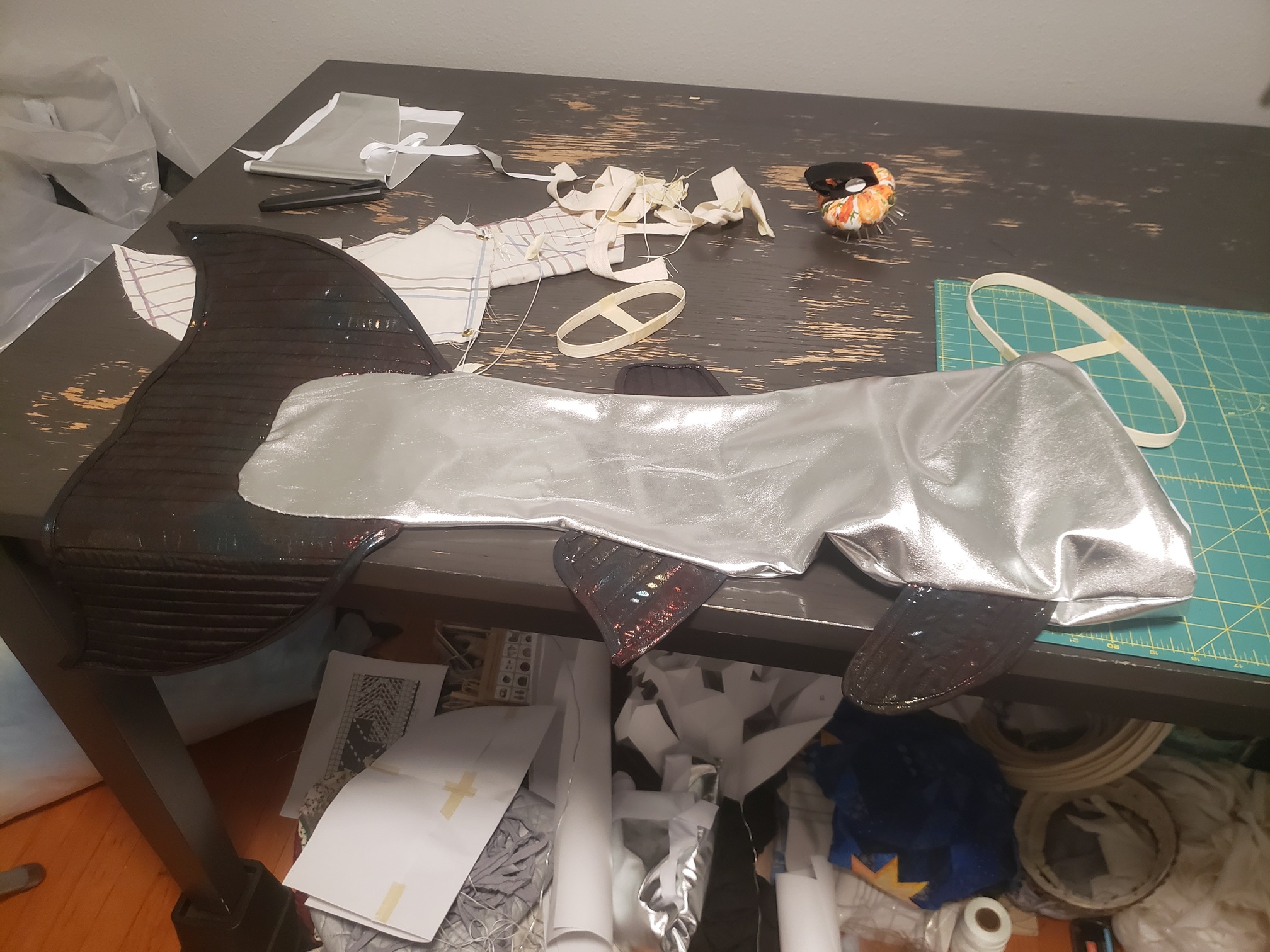
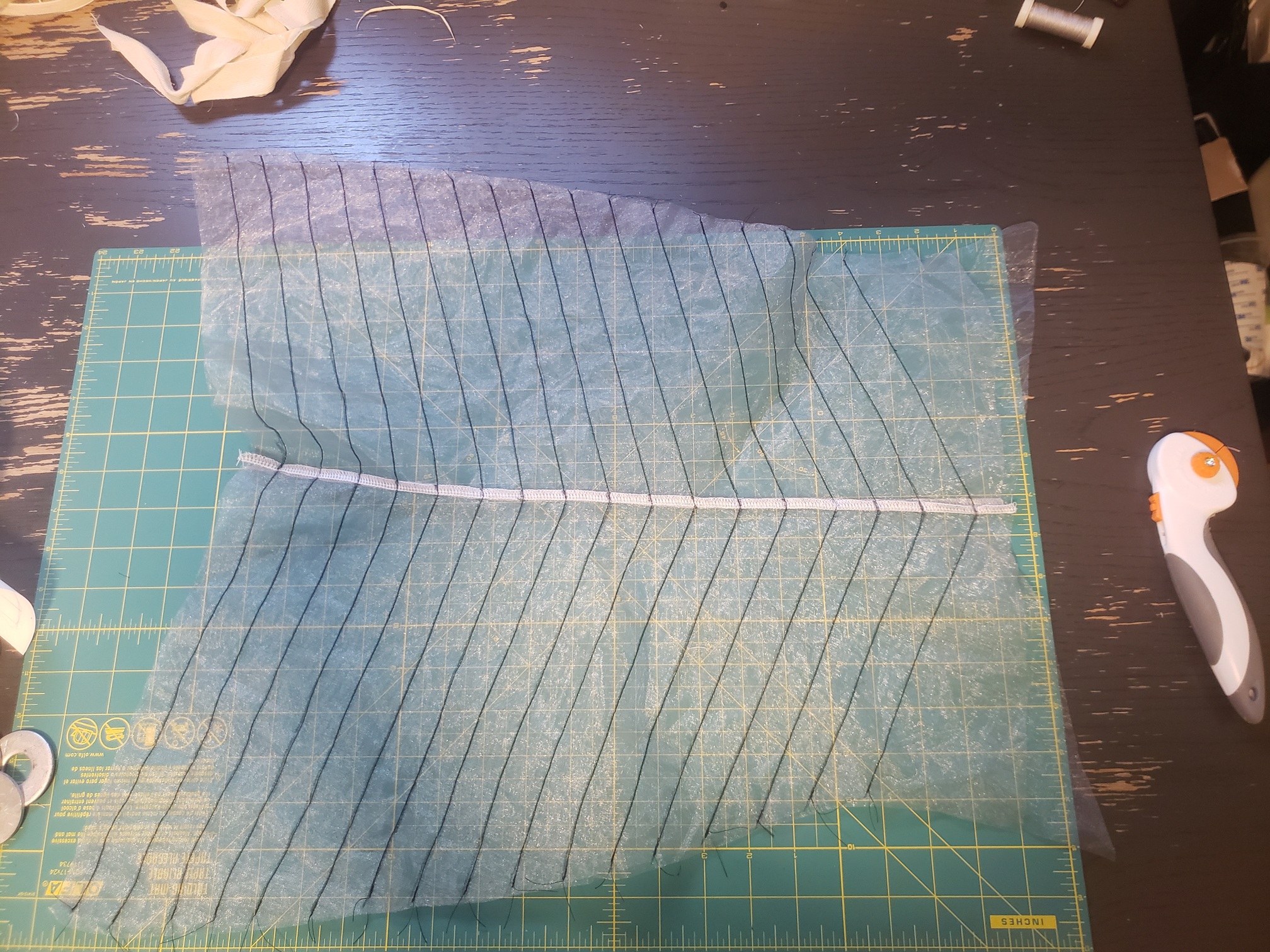
I used the tulle to give the tail more structure, and to hide the reed skeleton so that I wouldn't have boning channels visible on the outer tail. Funnily enough, the flattened version looks like a salmon filet! After adding the bones and sewing the two ends together, it was starting to literally take shape! I inserted it into the outer shell, pierced a skewer through the center to keep the top fin from flopping over, and lazily hot glued the raw edges inside. I eventually had to replace the reed boning with sturdier bodice boning because the reed boning broke after several weeks of shows.
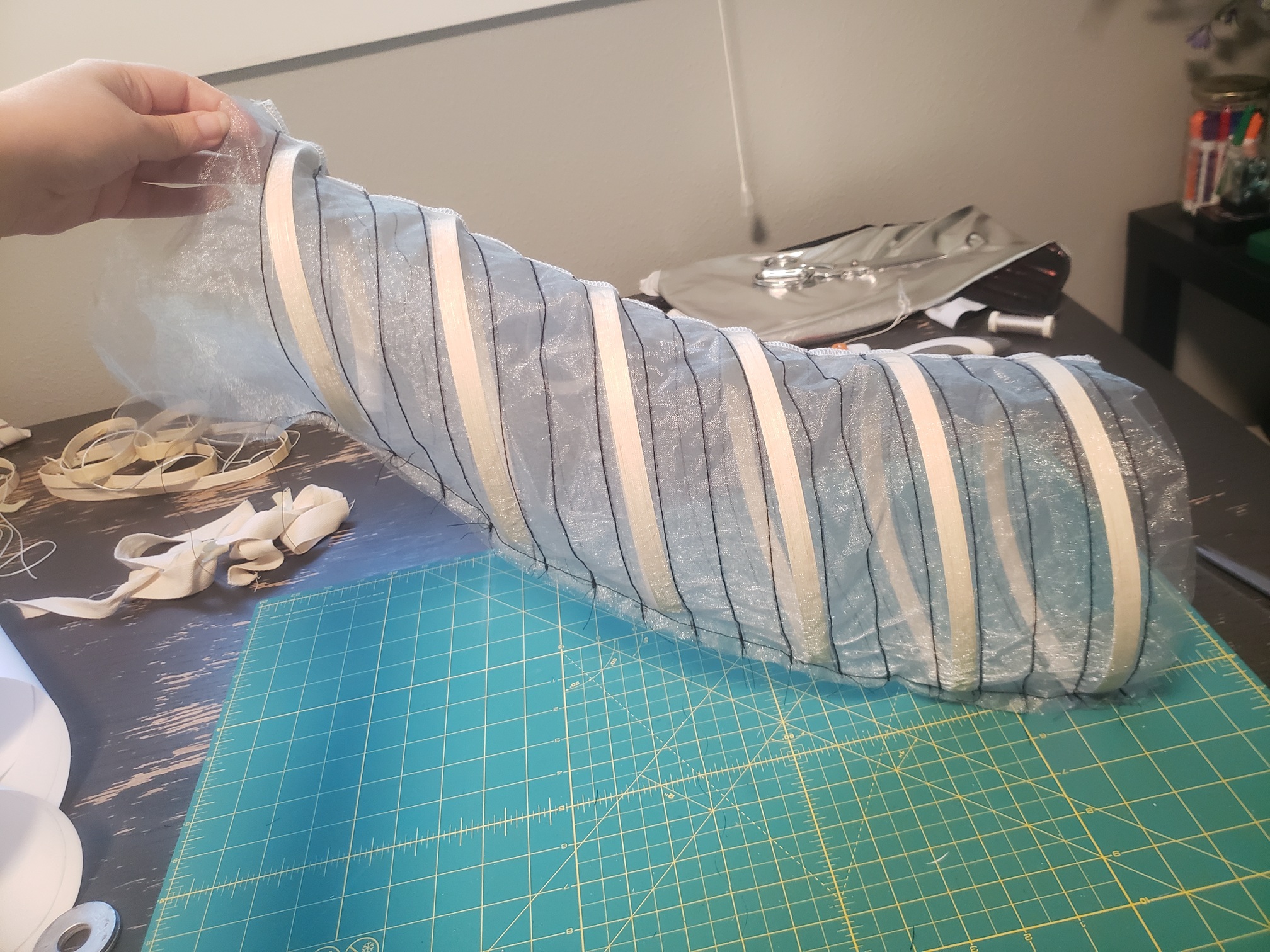
Next was the skirt. To create a continuous line from the hips to the tip of the tail, I wanted the skirt hem to come up at a slight angle. Instead of cutting the hem at an angle, however, I decided to add rouching to one side instead—this way, the gathers in the fabric would more closely resemble the somewhat crinkly nature of the tail. A slit was cut on the opposite side of the skirt to hide where the tail is tied to the leg, just above the knee. The base skirt pattern I used was actually a super simple self-drafted pattern I made using this tutorial for making a pencil skirt from stretch material. Although, I did not give the skirt negative ease in the waist because my fabric did not have 100% stretch (it was closer to 70% when I tested a scrap), and I was afraid the actor wouldn't be able to get it over their hips if I had. I cut the elastic with negative ease instead to compensate, which I think was the right decision because it fits her great!
I added two extra fins to each hip on the skirt, and a clip was sewn to the back at the waist to keep the tail out of the way when your arm gets tired of swaying it from side to side.
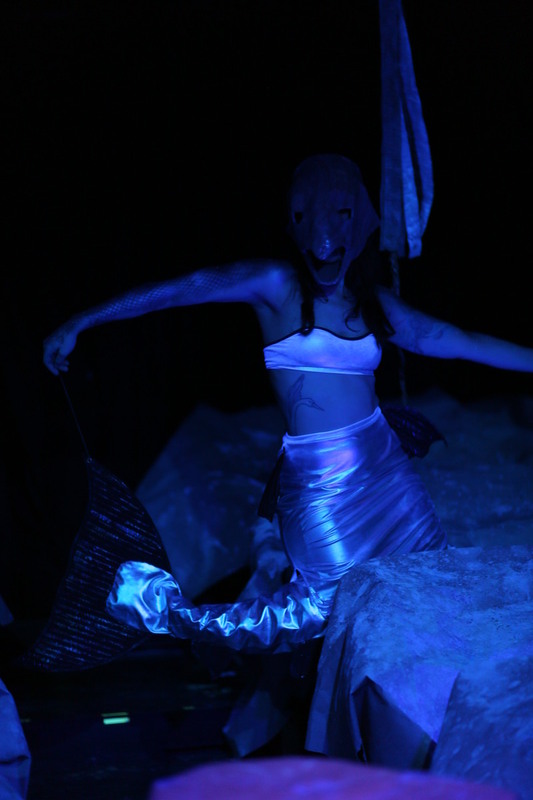
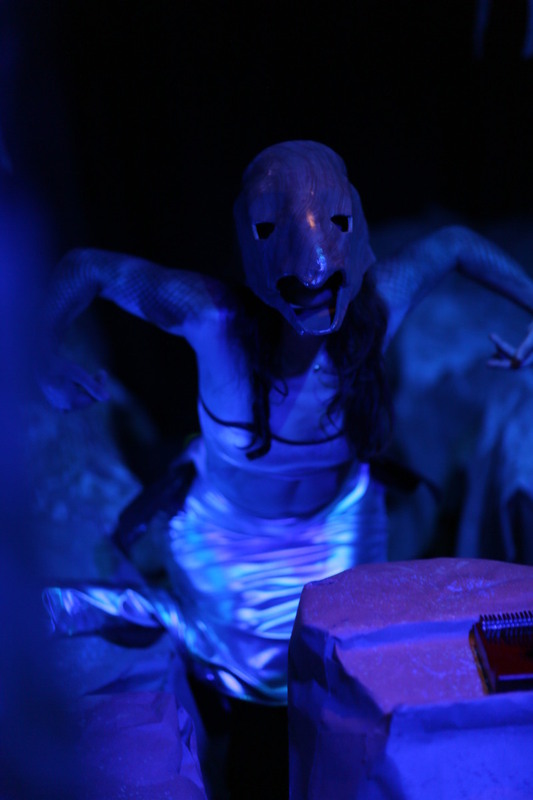
As for the top, I actually re-purposed an old sports bra I had by removing the straps and re-shaping the top to be more curved. I covered it in the same silver spandex that I used for the tail and bound the top edge with the black irridescent fabric. The final result is as you see below, with the mask completing the whole ensemble! The actor even went the extra mile and put scale make-up on her arms using silver paint and a fishnet stocking to get the right texture!
Comments